Policy to Introduce Indian Migrant Workers Exposes Government's Dark Side
The Storm Media Commentary, February 20, 2026
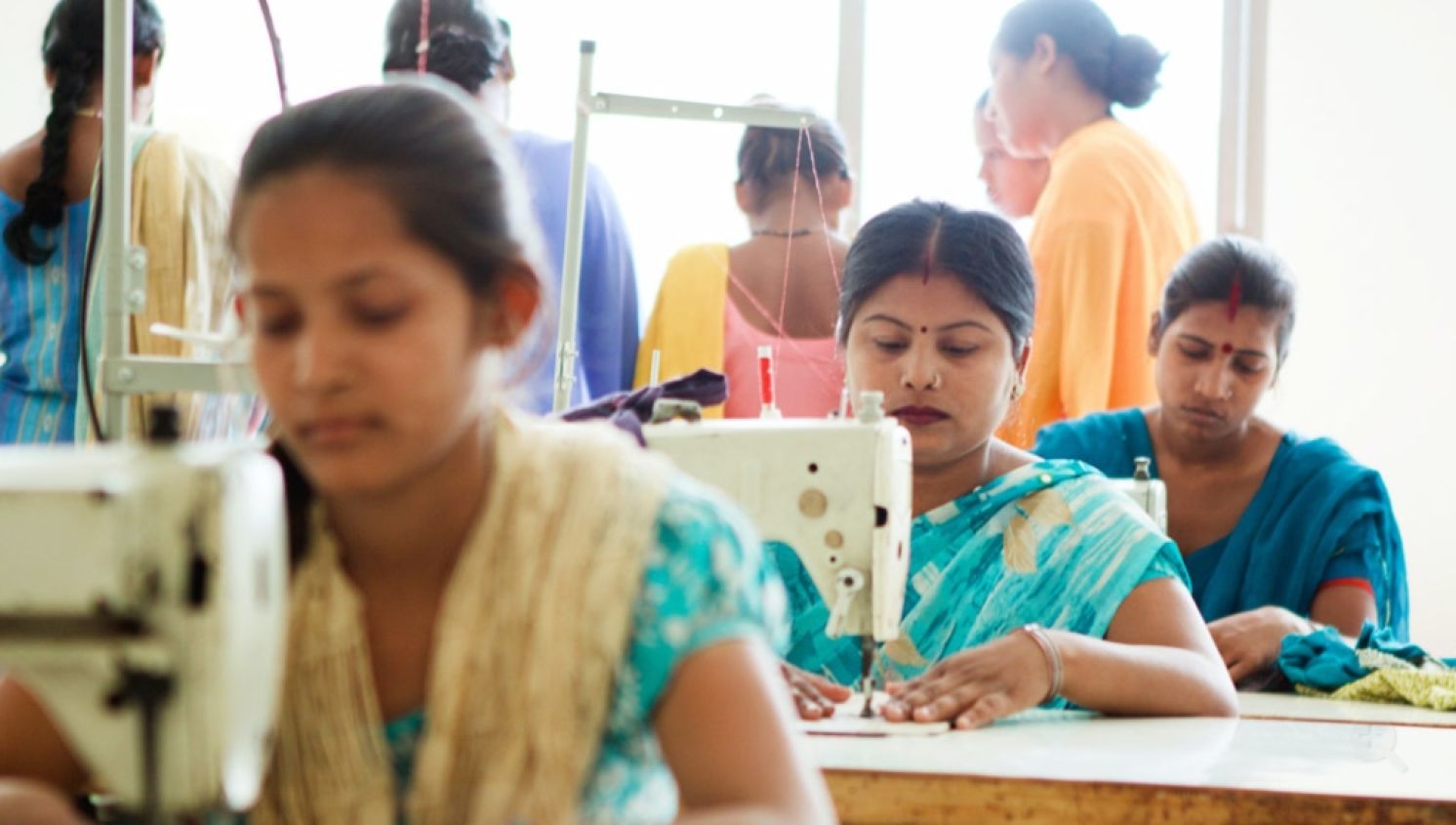
On introducing Indian workers to Taiwan, the administration of President Lai Ching-te has displayed its most troubling and questionable side.
Last week, Minister of Labor Hung Sun-han revealed at the Legislative Yuan that in January this year, a vice minister had led a delegation to visit Taiwanese businesses in India to better understand the viability of employing Indian workers in Taiwan. Currently, further confirmations are being made regarding administrative procedures, document verification, and the quality of health examinations, with the aim of ensuring smoother bilateral coordination. He also disclosed that “the first batch may be introduced within this year.”
The news that Taiwan may be open to employing Indian migrant workers this year immediately attracted public backlash. Critics cite the potential impact on public safety, particularly for women. The reason is straightforward: India has seen multiple sexual assault cases that garnered worldwide attention, leading to widespread public concern and skepticism about the policy.
The introduction of Indian migrant workers is not a new policy. In 2024 under then-Minister of Labor Hsu Ming-chun, Taiwan and India signed a memorandum of understanding (MOU) on facilitating the employment of Indian workers in Taiwan. At the time, rumors circulated that the government would “introduce 100,000 Indian workers,” which officials denied, attributing such claims to “cognitive warfare.” The issue gradually faded before the policy was formally implemented, but has resurfaced now after Hung indicated that 1,000 Indian workers may be introduced this year.
Faced with public concern and opposition, the Lai administration’s response has been strikingly poor. One approach has been to shift responsibility, claiming the policy was driven by the opposition, and therefore “cannot be blamed on the DPP.” Another has been to attribute the backlash to “malicious actors deliberately amplifying concerns.”
The first argument is easily refuted. From initiation and promotion to the signing of the MOU and the current administrative preparation, the policy has been entirely carried out under DPP governance. To attribute responsibility to opposition parties that have been out of power for over a decade is clearly overstated. If the opposition were truly so effective in driving policy, nuclear power would have long been reinstated.
The second claim is even more problematic. While public concerns—particularly regarding women’s safety—may include elements of stereotyping or bias, it is also true that India has experienced widely reported sexual assault cases. Such perceptions are not unique to Taiwan. The government could have addressed these concerns through clear communication and by working to correct stereotypes.
Instead, the Lai administration has resorted to simplistic narratives, attributing opposition to “malicious actors” or “external forces,” repeating a familiar pattern. Two years ago, during earlier controversies over the same policy, officials first denied the issue, labeling it as “China-driven cognitive warfare.” After the MOU was signed, anonymous officials suggested that opposition to Indian workers undermined Taiwan–India relations within the so-called “Milk Tea Alliance.”
Even more striking—and somewhat ironic—is the conclusion that the “deeper objective” behind such opposition is to “undermine public trust in the government” and “weaken the authority of governance,” while “mobilizing workers, youth, and women to resist government policies.” This line of reasoning echoes rhetoric from the martial law era, when opposition voices were often dismissed as attempts to “drive a wedge between the government and the people.”
Frankly, this is neither an effective way to promote policy nor a credible defense of it. Blaming everything on “pervasive enemies” and labeling dissent as “cognitive warfare” is increasingly unconvincing. Elevating a domestic labor policy issue into a matter of existential confrontation is unnecessary. Moreover, public concerns—especially among women—are real and substantive. Ignoring these concerns while pushing the policy forward only deepens distrust.
The Ministry of Labor (MOL) argues that introducing Indian workers would diversify Taiwan’s sources of migrant labor. Currently, most migrant workers come from four Southeast Asian countries, whereas countries like Japan, South Korea, and Singapore draw from more than ten source countries. Diversification is therefore framed as a way to reduce risk. Another consideration is strengthening ties with India under the New Southbound Policy.
While these justifications are not without merit, they appear insufficient when faced with public concerns. They lack urgency and flexibility, making them less compelling. For instance, diversification could involve many other countries. Singapore sources workers from 11 countries, Japan from 15, and South Korea from 17, while Taiwan relies on only four. Even accounting for geopolitical constraints, Taiwan still has multiple alternatives beyond India. As for strengthening ties with India, shifting geopolitical dynamics have reduced the necessity of prioritizing this objective.
The Lai administration should respond with professionalism—clearly explaining the policy, addressing public concerns, and reducing resistance. It should rely more on policy-based communication and less on political rhetoric, and refrain from labeling critics as influenced by “cognitive warfare” or “external forces.”
More importantly, before advancing this policy, the government must improve migrant worker management. Currently, the number of undocumented migrant workers in Taiwan exceeds 90,000, while the total migrant worker population stood at 865,000 as of the end of February this year. This is hardly a reassuring management outcome. Simply asking the public to “rest assured” is insufficient. If the government wishes to gain public acceptance for introducing Indian workers, it must first demonstrate effective management and deliver tangible results.